
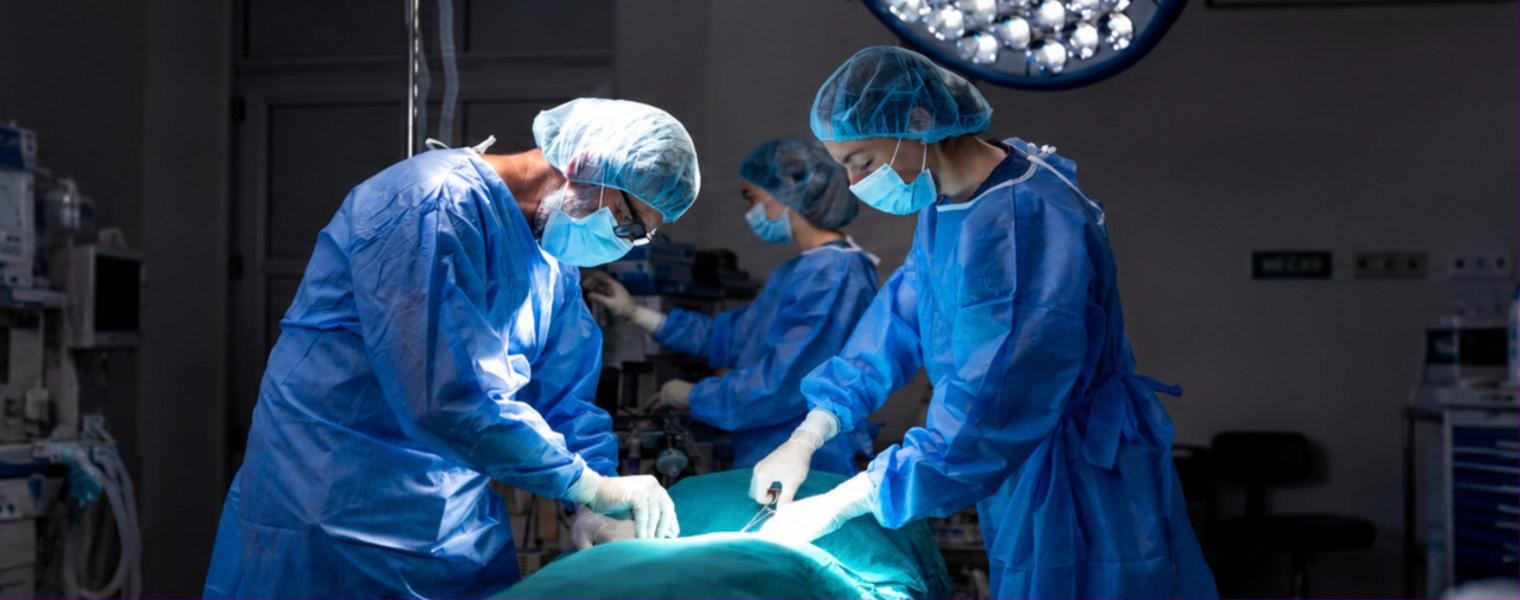
The abdominal wall does more than its name suggests: it governs everyday movement, protects the organs and takes part in breathing. When it is damaged, repairing it is not simply a matter of closing it. Function has to be given back, and doing that safely asks for more than a general surgical residency holds.
That is the work of the Abdominal Wall Unit at Sheba Medical Center. It treats conditions ranging from hernias to necrotising fasciitis, with techniques ranging from laparoscopy to robotic surgery, and each is chosen for the case rather than out of habit. Many operations are resolved with laparoscopy alone, with no robotic platform.
Dr. Nadav Nevo, attending surgeon and abdominal wall reconstruction consultant, and his colleagues spend part of their work training residents beyond the standard programme. It is not an academic extra. It is what means a patient with an uncommon condition finds, on the other side of the table, someone trained for that condition.
A good share of those who reach the unit have already been through an operating room elsewhere, and sometimes through years of complications. Those are the cases it exists for: the ones where the usual route no longer applies and a safe one has to be found.
The team also measures the result by something that does not show on a scan. A precise, symmetric incision does not change function, but it changes the body a patient goes home in. In this unit the two are part of the same job.