
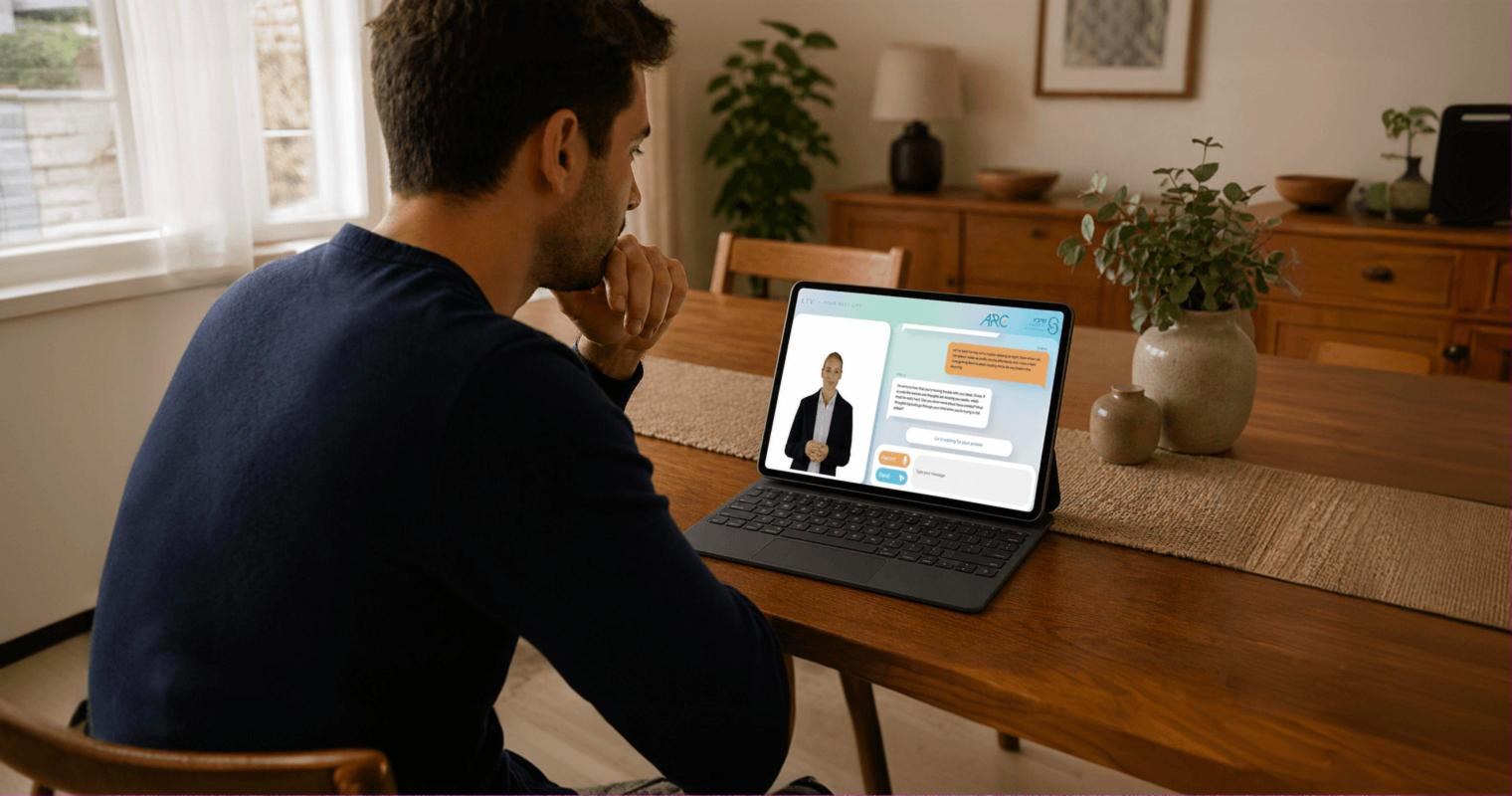
Asking for help with mental health almost always begins with a wait. A first interview is needed, and that interview has to be done by a professional who is in short supply everywhere. In Israel, October 7th turned a global problem into an immediate one: more trauma cases arrived at once than the system could assess.
LIV is what Sheba Medical Center built for that bottleneck. It works as a conversation: a person speaks or writes with an avatar from a phone or a computer, and at the end the clinical team receives an ordered summary — background, presenting concern, medical and psychiatric history, severity, and what should happen next. The decision still belongs to a psychiatrist, who reviews that summary.
“The goal is not to replace the therapist, but to empower them,” said Dr. Asaf Caspi, deputy director of Sheba's psychiatric division, when the authorisation became known.
On 27 April the medical devices division of the Israeli Health Ministry approved LIV as a clinical decision-support tool: the first authorisation of its kind in the country. It was founded in 2024 inside ARC, Sheba's innovation centre, together with the hospital's mental health division and with Microsoft and KPMG. It is now used in Israeli hospitals, health funds, rehabilitation centres and public bodies.
It is worth saying what is not there yet: the clinical studies behind it — two, with 385 participants — are unpublished. What is known of them was reported first by the Israeli press, not by a scientific journal. An authorisation and a reviewed literature are not the same thing.
Outside Israel there is already interest. In August, researchers in the United States military health system were preparing a comparison of LIV against the tool regarded there as the reference for diagnosing post-traumatic stress. It is Sheba's way of working in one line: something seen in the waiting room, turned into something that works elsewhere.